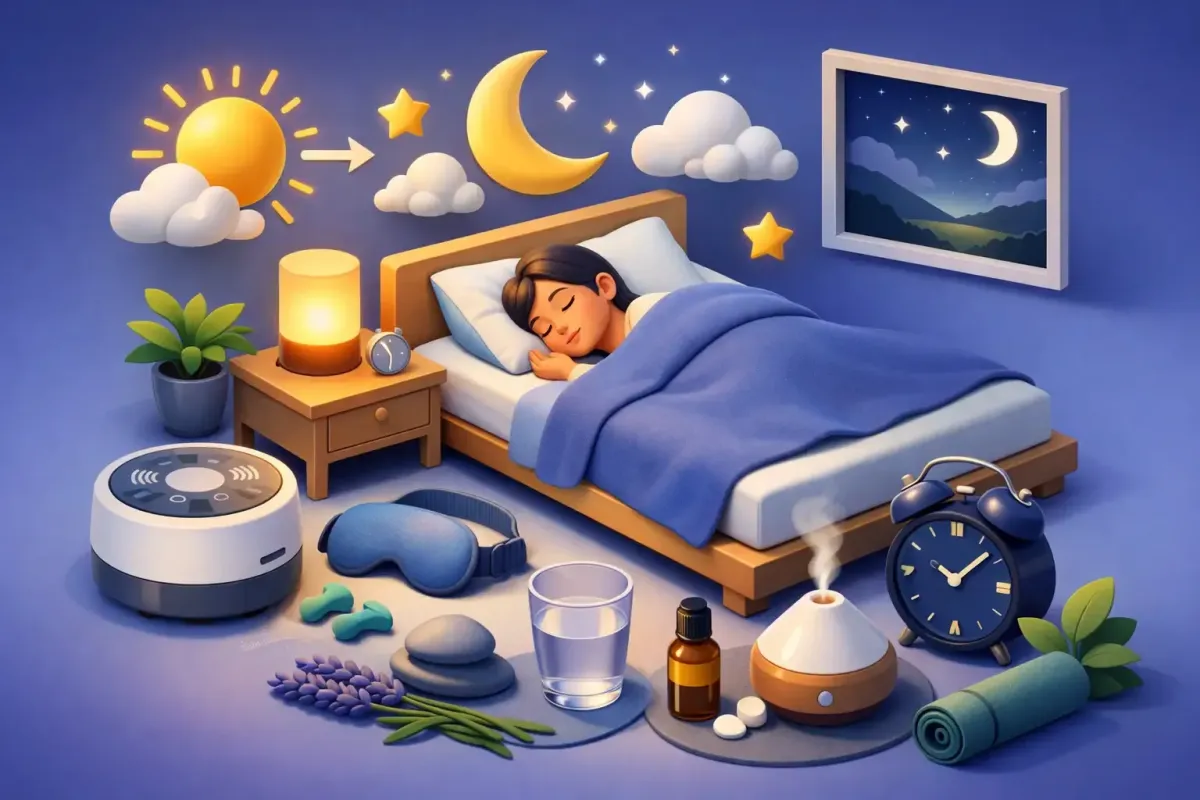
How to improve sleep without medication
You can be disciplined all day, make smart decisions, handle pressure ... and still lie awake at 2:13 a.m. staring at the ceiling.
That disconnect is exactly why so many capable adults start searching for how to improve sleep without medication.
The problem usually isn't laziness, lack of effort or poor intentions. More often, it's an overactive nervous system, a conditioned pattern of alertness at night, or stress that your mind never fully powers down from.
If you're high-functioning and tired of surface-level advice, it helps to start with one truth: poor sleep is rarely just a nighttime problem. It's often the end result of what your body, mind, and subconscious have been practicing all day. That is also why lasting sleep improvement tends to come from changing patterns, not forcing sleep.
How to improve sleep without medication starts with the real cause
Many people assume sleep problems come from one obvious issue, like caffeine or screen time. Sometimes they do. But for busy professionals, sleep trouble is often more layered. You may be physically tired but mentally on call. You may have trained your brain to associate bedtime with problem-solving, worrying, or monitoring whether you're falling asleep fast enough.
That last part matters more than most people realize. Once sleep becomes something you chase, your brain can start treating bedtime like a performance test. The harder you try, the more alert you become. This creates a frustrating cycle where exhaustion is real, but rest still feels out of reach.
The most effective non-medication approach looks at both behavior and conditioning. Good sleep habits help, but if your body has learned to stay vigilant at night, habit changes alone may not be enough.
Build a nervous system that feels safe enough to sleep
Sleep isn't something you can command. It happens when your system shifts out of activation. For many adults under constant pressure, that shift does not happen automatically anymore.
This is where daytime stress management becomes a sleep strategy, not a separate wellness goal. If your brain spends the day reacting, pushing, bracing, and suppressing, it does not instantly become calm because the clock says bedtime. Your body needs a clearer transition.
Start by reducing unnecessary stimulation in the final hour before bed. That does not mean creating a perfect routine with ten steps you will abandon in three days. It means choosing a few repeatable cues that tell your brain the day is over. Dimmer light, quieter input, a warm shower, gentle stretching, or five minutes of slow breathing can all help. Consistency matters more than complexity.
The trade-off is that some popular habits feel relaxing in the moment but keep your system activated underneath. Scrolling, late-night email, and intense TV can distract you from stress without actually settling it. If you regularly fall asleep to noise or stimulation, the issue may not be that you need those things. It may be that silence gives your mind room to race.
Stop trying to knock yourself out with exhaustion
A lot of driven adults use productivity as a sleep tool. They stay busy until they are depleted and hope that exhaustion will overpower their mind. Sometimes it works for a night. Long term, it usually backfires.
When you run hot all day and collapse into bed, your body may be tired while your brain is still revved. This is one reason people can fall asleep quickly and then wake at 3 a.m. with a mind full of unfinished thoughts. The body paused. The internal pressure did not.
A better approach is to create small decompression points before bedtime. Even ten to fifteen minutes of intentional unwinding can interrupt the pace your nervous system has normalized. Journaling can help if your mind is full of loops. A short written brain dump gives those thoughts somewhere to go besides bed.
If you wake during the night, resist the urge to evaluate how bad tomorrow will be. That mental spiral often creates more alertness than the waking itself. Instead, treat waking as a cue to lower pressure. Slow your breathing. Relax your jaw and shoulders. Let the goal be rest, not immediate sleep.
Protect the basics, but do not expect basics to solve everything
If you want to know how to improve sleep without medication, sleep hygiene still matters. It's just not the whole story.
A consistent wake time is one of the strongest anchors you can give your system. Morning light exposure helps reinforce your natural sleep-wake rhythm. Limiting caffeine later in the day is another obvious but powerful lever, especially if your system is already stress-sensitive.
Your bedroom should support sleep rather than mixed signals. Cooler temperature, lower light, and fewer work cues can make a meaningful difference. If you routinely work, argue, eat, and scroll in bed, your brain may stop treating that environment as a place to let go.
Still, there is an important nuance here. People with stress-related insomnia often become overly focused on doing every sleep rule correctly. Then the routine itself becomes another pressure system. If that sounds familiar, simplify. Good sleep support should feel steady and realistic, not rigid.
Change the pattern underneath the insomnia
This is where many intelligent, motivated people get stuck. They know what they are supposed to do. They have read the articles, tried the magnesium, bought the blackout curtains, and listened to the podcasts. Yet bedtime still triggers the same internal state.
That usually means the pattern is deeper than information. The conscious mind may want sleep, while the subconscious remains on guard. That can happen after long periods of stress, burnout, grief, health anxiety, major life change, or simply years of over-responsibility. Your mind learns a pattern and repeats it automatically.
When sleep issues are driven by subconscious conditioning, change often requires more than self-discipline. It requires helping the brain and body relearn what nighttime is for. This is one reason hypnosis can be so effective for sleep improvement. Rather than fighting symptoms on the surface, it helps interrupt the internal pattern that keeps recreating the problem.
For many clients, the breakthrough isn't about becoming sleepy on command. It's about releasing the alertness, anticipatory anxiety, and mental looping that have become attached to bedtime. Once that pressure decreases, sleep can return more naturally.
At Sharon Jackman Hypnosis, this work is approached as a serious, personalized process for adults who are tired of trying to outthink a pattern that keeps winning. That matters, because sleep struggles often carry shame. People assume they should be able to fix it with enough effort. But when the issue is rooted below conscious awareness, more effort isn't always the answer.
What to do if your mind is the problem at night
If your body is in bed but your mind keeps working, aim for interruption rather than suppression. Trying not to think usually makes thoughts louder. Instead, give your attention a calmer job.
A simple breathing rhythm, mental imagery, or a familiar relaxation audio can create enough structure to redirect your focus. Repetition helps. The goal isn't to force unconsciousness. The goal is to stop feeding mental momentum.
If worry is your main trigger, create a daily checkpoint for it earlier in the evening. Give yourself ten minutes to write down concerns, next steps, and anything unresolved. This does not eliminate stress, but it can reduce the brain's urge to bring everything up once your head hits the pillow.
And if insomnia has become emotionally loaded, acknowledge that directly. Frustration about sleep often becomes part of the sleep problem. The fear of another bad night can activate the same pattern before the night even begins.
When to get more support
There is a difference between occasional poor sleep and a pattern that keeps draining your performance, mood, patience, and health. If sleep trouble is ongoing, affecting your work or making you dread bedtime, it's worth taking seriously.
Non-medication support can be especially valuable if you want a solution that addresses the root cause rather than masking symptoms. That does not mean every strategy works for every person. Some people need behavioral adjustments. Others need nervous system regulation. Others need help shifting the subconscious pattern that has made sleeplessness automatic.
What matters most is choosing an approach that respects the complexity of the problem. If you have already tried to fix this through willpower, more pressure is unlikely to help. A better path is one that helps your system feel safe, retrains the bedtime response, and makes sleep feel natural again instead of like a nightly battle.
Better sleep is rarely about becoming a different person. It's about removing what keeps your mind and body from doing what they already know how to do.