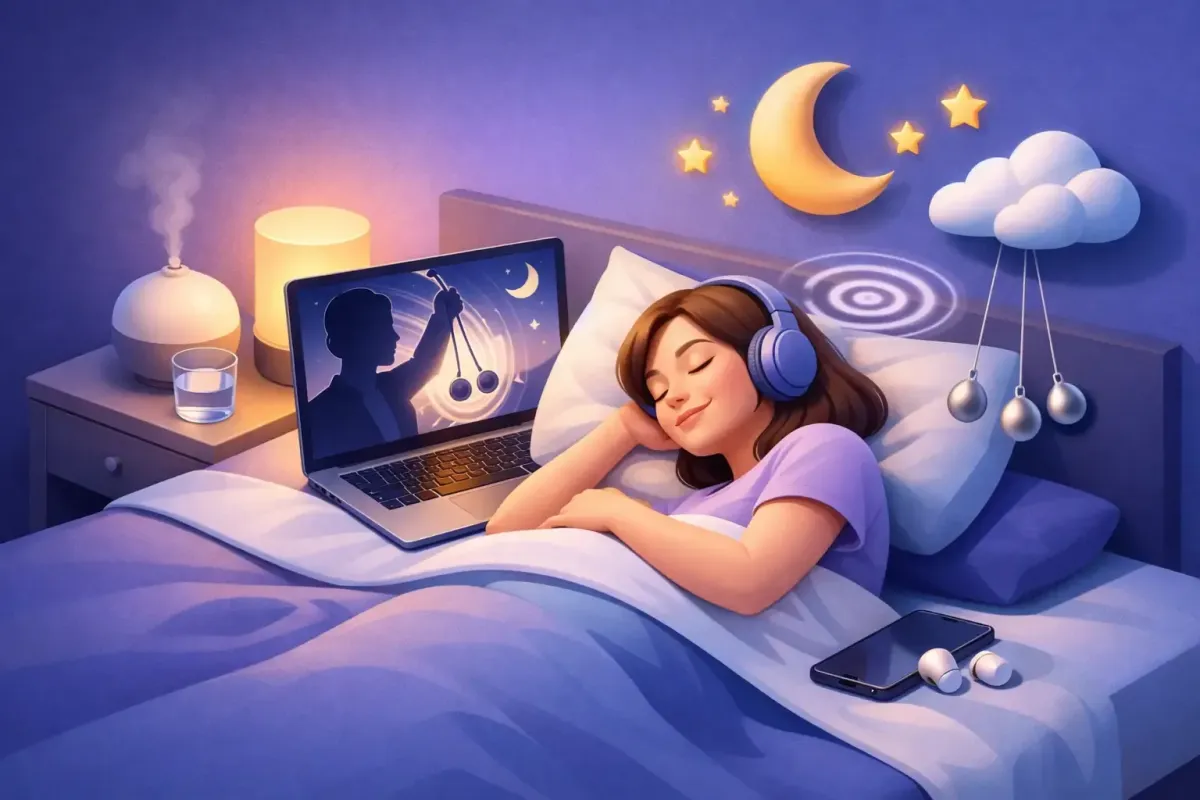
Does Online Hypnosis for Sleep Work?
You can be exhausted all day, finally get into bed, and then your mind decides it’s time to review every unfinished task, awkward conversation, and worst-case scenario. If that sounds familiar, online hypnosis for sleep may feel surprisingly practical - not because it forces sleep, but because it helps calm the subconscious patterns that keep your body alert when you want to rest.
For many high-functioning adults, sleep issues aren’t about not knowing what to do. You’ve probably already tried the obvious fixes. You’ve cut back on caffeine, turned off the screens, bought the magnesium, listened to the meditation, maybe even read the sleep books. Yet your body still acts like nighttime is a performance review.
That’s where hypnosis can be different. It doesn’t ask you to push harder. It works with the part of the mind that’s running the stress response underneath the surface.
Why sleep problems often outlast good habits
People who are successful in other areas of life are often frustrated by insomnia because it doesn’t respond well to willpower. The same drive that helps you perform at work can actually make sleep harder. You try to make yourself sleep, track your sleep, optimize your sleep, and think your way into sleep. That effort can keep your nervous system activated.
Sometimes the issue is obvious stress. Sometimes it’s more subtle. Your mind may have learned to associate bedtime with pressure, worry, or hypervigilance. You lie down and your body shifts into alert mode without your permission. That pattern can continue even when life looks fine on paper.
This is why surface-level strategies may help temporarily but not fully resolve the issue. If the subconscious has linked bed, darkness, quiet, or nighttime stillness with mental activity or tension, you need more than tips. You need a way to update the pattern.
How online hypnosis for sleep actually helps
Online hypnosis for sleep is not about being unconscious, controlled, or made to do anything against your will. It’s a focused, relaxed state where your mind becomes more receptive to helpful suggestions and new associations. You’re not asleep. You’re not gone. You’re simply less caught up in the usual mental noise.
In that state, hypnosis can help reduce the internal habits that interfere with sleep, such as racing thoughts, bedtime dread, anticipatory anxiety, and the need to stay mentally "on." It can also reinforce a stronger sense of safety, physical calm, and trust in your body’s ability to rest.
That matters because sleep is not something you accomplish by force. It happens when the mind and body stop treating rest like a problem to solve.
A good hypnosis session for sleep may focus on slowing the stress response, quieting mental overactivity, releasing tension stored in the body, and interrupting the loop of trying, failing, and worrying about failing again. For some people, the biggest shift is simply this: bedtime stops feeling like a nightly test.
Why the online format works better than some people expect
A lot of people assume hypnosis has to happen in person to be effective. In reality, online sessions can work very well, especially for sleep-related issues.
There’s a simple reason for that. Comfort matters. When you’re in your own home, in a familiar chair or room, your body often settles faster. You’re not commuting, rushing, or transitioning from a busy day into an unfamiliar office. That ease can support the hypnotic process.
Online hypnosis for sleep also fits real life. If you’re already stretched thin, convenience is not a small detail. It’s often the difference between getting support consistently and putting it off for another month. For professionals juggling deadlines, family responsibilities, travel, or packed calendars, Zoom sessions make it easier to get help without adding another layer of stress.
Privacy is another benefit. Some clients feel more at ease addressing sleep struggles, anxiety, or nighttime fear from home. That sense of control can help them relax into the process.
Of course, online isn’t magic just because it’s convenient. The quality of the practitioner matters. Experience, training, and the ability to tailor the work to you matter much more than whether the session happens across a room or across a screen.
Who online hypnosis for sleep tends to help most
This approach can be especially helpful if your sleep problem has a strong mental or emotional component. That includes people who are tired but wired, people who dread bedtime because they expect another bad night, and people who wake in the middle of the night with a mind that starts sprinting.
It can also help those who are carrying ongoing pressure. You may look capable and composed from the outside while your nervous system never fully powers down. In those cases, sleep is often not the only issue. The deeper pattern may be constant vigilance, perfectionism, unresolved stress, or a subconscious belief that resting is unsafe or unproductive.
That said, it depends on the cause. If sleep issues are tied to a medical condition, medication, untreated trauma, or something like sleep apnea, hypnosis should not be viewed as a replacement for proper medical care. It can be a supportive tool, but it should be used wisely and in context. A credible hypnotist will respect that distinction.
What to expect in an online sleep hypnosis session
If you’ve never done hypnosis before, you might be surprised by how straightforward it feels. You’re guided into a relaxed, focused state and talked through language designed to help your mind and body shift out of habitual tension.
There’s no need to perform well or "do it right." In fact, trying too hard usually gets in the way. The process works best when you allow yourself to follow the guidance and notice what changes.
A personalized session is often very different from listening to a generic audio track. Recordings can be useful, especially for reinforcement, but one-on-one work can address your specific sleep pattern. Maybe you fall asleep easily but wake at 3 a.m. with dread. Maybe your body is tired but your mind won’t stop planning. Maybe nighttime triggers grief, loneliness, or a pressure to get enough rest before a demanding day. Those are different experiences, and they should be treated that way.
That’s one reason many people seek out an experienced professional rather than relying only on apps or videos. A customized approach tends to go deeper than a one-size-fits-all routine.
What makes results more likely
Hypnosis is not about being weak-minded or unusually suggestible. It’s more about willingness, rapport, and using the right approach for the right problem. People who do well are often thoughtful, self-aware, and motivated. In other words, the very people who are frustrated that insight alone hasn’t solved the issue.
Results also improve when the goal is realistic. The aim may not be instant perfect sleep every night. It may be falling asleep more easily, reducing bedtime anxiety, getting back to sleep faster, or feeling less controlled by the problem. Those changes can create momentum, and momentum matters.
Consistency helps too. Some people feel a noticeable shift quickly. Others need a series of sessions to unwind a longer-standing pattern. That doesn’t mean it isn’t working. It may simply mean your nervous system has practiced stress for a long time and needs repetition to learn something new.
At Sharon Jackman Hypnosis, this is where professional experience becomes especially important. When someone has spent decades helping clients change stubborn subconscious patterns, they’re better equipped to recognize what’s really driving the issue and how to address it safely and effectively.
Is online hypnosis for sleep worth trying?
If you’re tired of managing symptoms without changing the deeper pattern, it may be. Not because hypnosis is a gimmick or a quick fix, but because sleep problems are often less about discipline and more about what your subconscious has learned to do at night.
You don’t need more shame about being tired. You don’t need another rigid routine that makes you feel like you’re failing before your head hits the pillow. Sometimes the most productive thing you can do is stop battling your mind and start working with it.
Sleep tends to return when your system no longer believes it has to stay on guard. And that’s a change worth giving yourself permission to make.